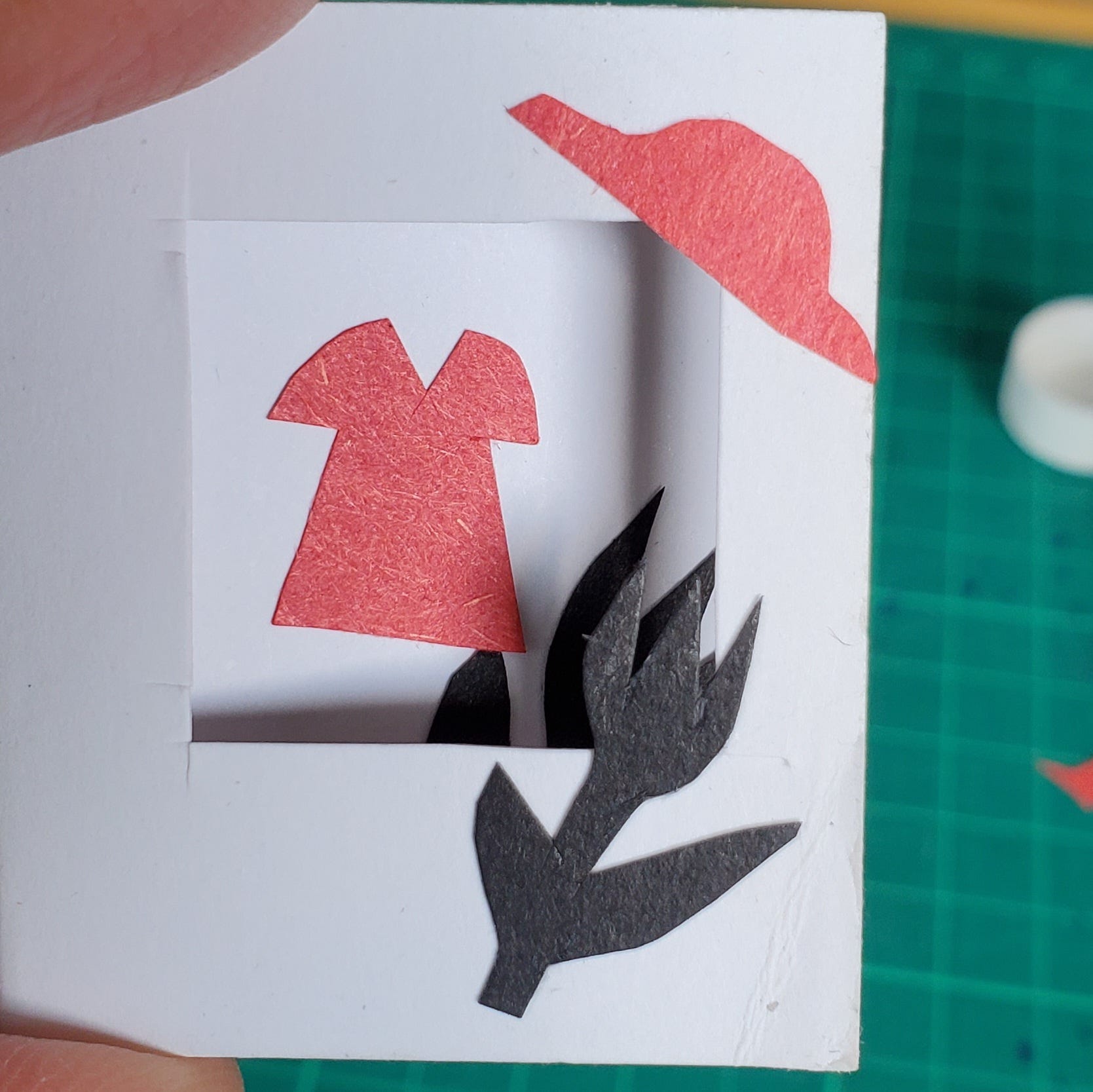
Paper, scissors, genders, stories
A queer reading of the Little Red Riding Hood, and more reflections on the power of papercutting

This story goes like this: once upon a time, there was a Little Girl. All the other girls in her village loved baking with their mothers and picking flowers with their grandmothers. Generations of little girls were told to be afrad of the woods and of Scary Wolves that lived there- or, if worst came to worst, to scream loudly and wait to be saved by a brave woodsman. Oh and they all loved wearing red dresses and hats and all had long, gorgeous hair. But this Little Girl was different. She hated dresses, dreamt of cutting her hair off, was not afraid of the woods, and had no interest in being saved. One upon a time, there also was a Big Wolf. For generatitons, all the other wolves in his forest were scaring old ladies and eating little girls. All were oozing toxic masculinity, but also, secretly, loved dressing up. This Big Wolf was different. He did not want to be scary, or violent. He did not want to take old ladies’ clothes by force. He did not want to eat little girls He just really, really wanted to wear a red dress.


The story goes on - and has multiple versions of what happened in The Forest, and afterwards. The Wolf uses his teeth to help the Girl chop off her hair. The Girl gives the Wolf her dress. The forest becomes a Queer Zone of no more gender tyranny. The Girl and the Wolf become best friends. The villagers and the wolf pack reject their queer weirdos. The dress becomes a flower. The Wolf becomes a fashion influencer. The Grandma makes more dresses for everyone else in the forest. The Girl opens a queer barber shop.
I have been re-telling the story of Little Red Riding Hood since 2021: what began as a simple homework in a short illustration course has soon become an obsession. I have experimented with illustrating it in watercolour; charcoal; and prints.
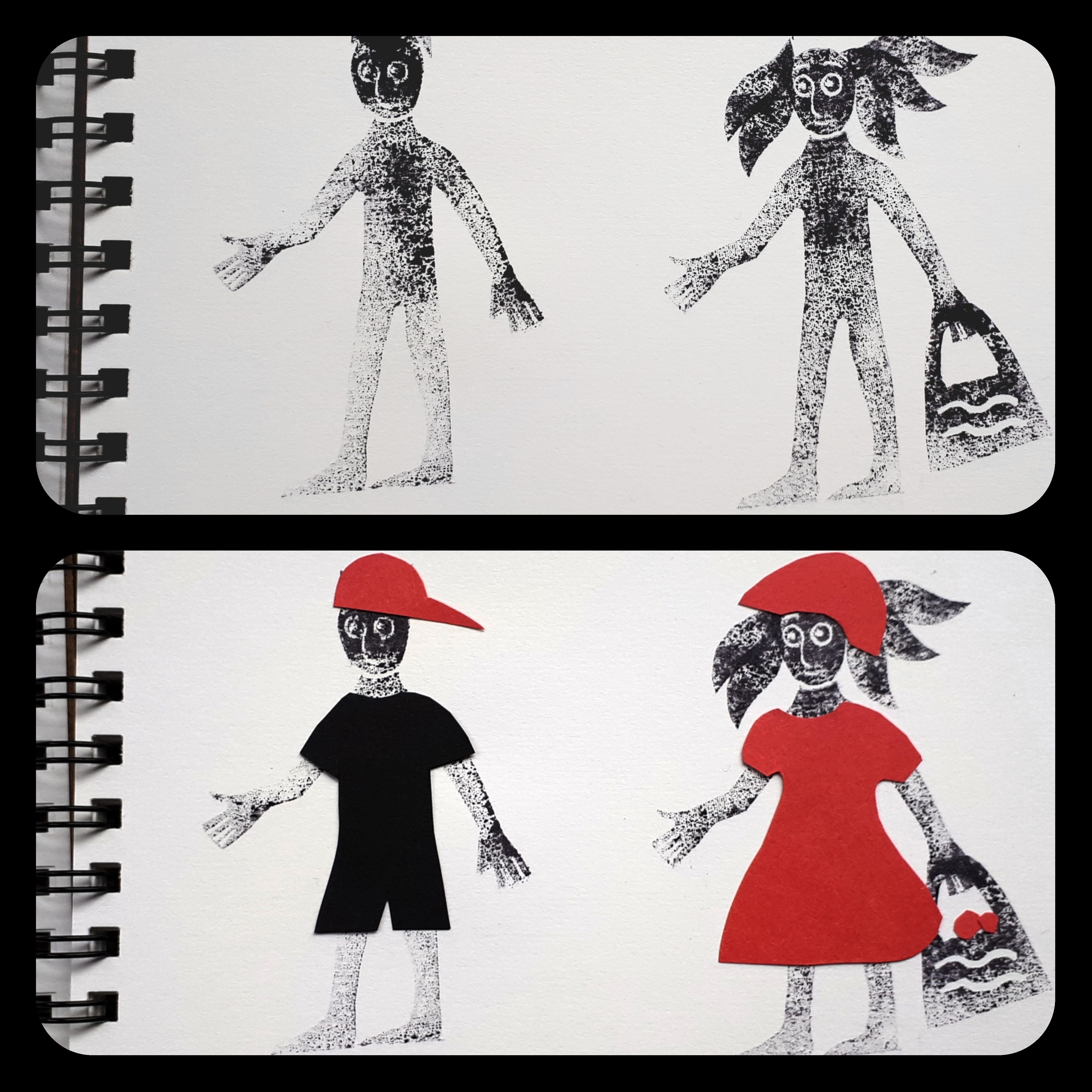
But interestingly - though not surprisingly - I came back to paper and scissors, to meditate on the medium. A folded book to tell the same story twice: from the point of view of the Girl, and from the point of view of the Wolf. A cut-through opening pulls the viewer from one story into another, almost against their will. And the movable pieces of paper - hair, dress, beard, hat, flower, heart, smile - allow the story to tell itself in many, many different versions.
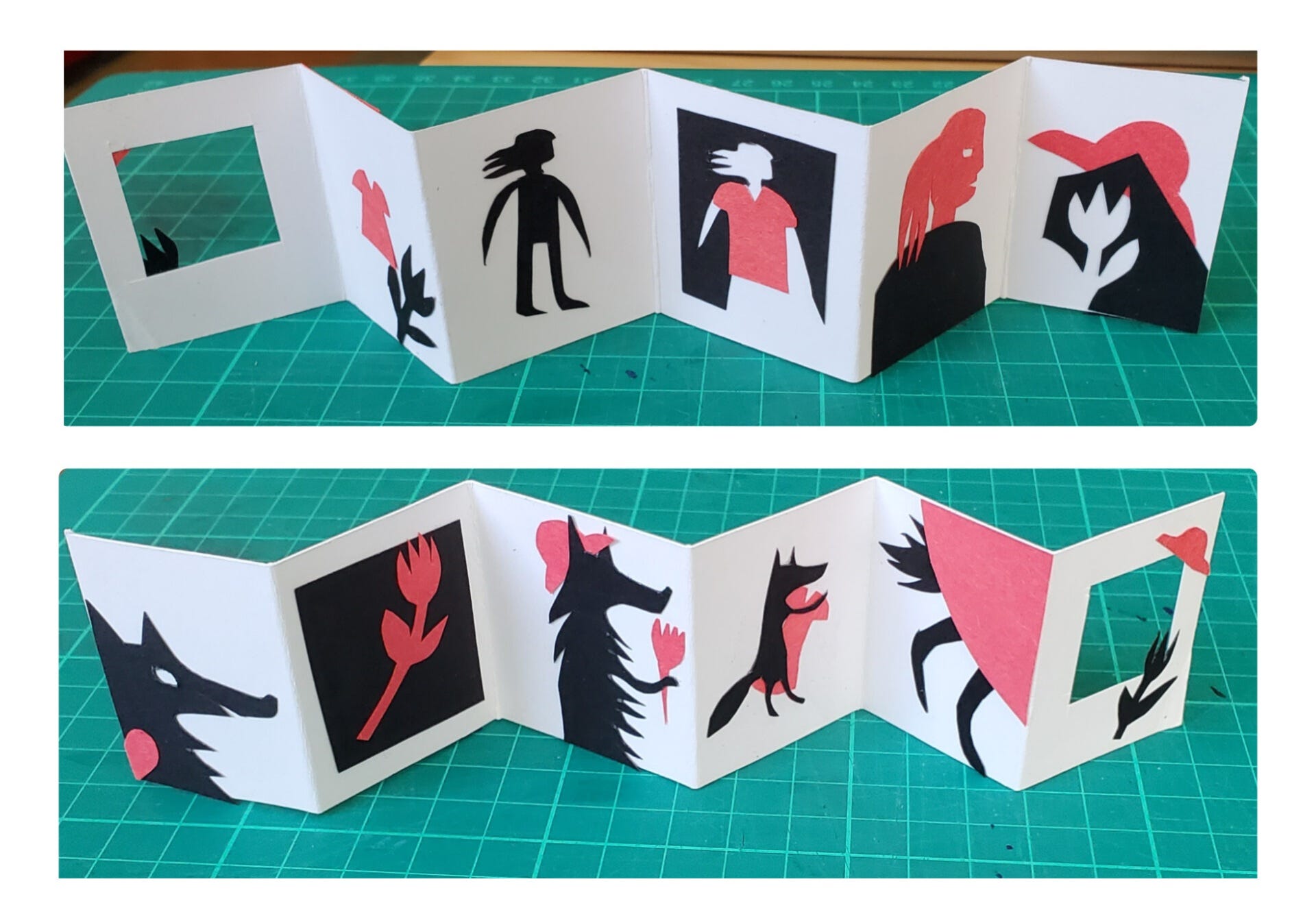
This will be a children’s story book, and a board game.
And it is also a reminder of the power folding, cutting and rearranging papers, as a tactile practices of storytelling. A way to re-tell stories of our childhood; reimagine journies of our identities; bring joy in place of shame our doubt. And re-arrange more papers.