Reading Illustration Research Methods by Gannon and Fauchon
#100dayproject2026, days 64-70

How does research illustration relate to academic content? How can visual tools work to capture, process or enhance research materials?
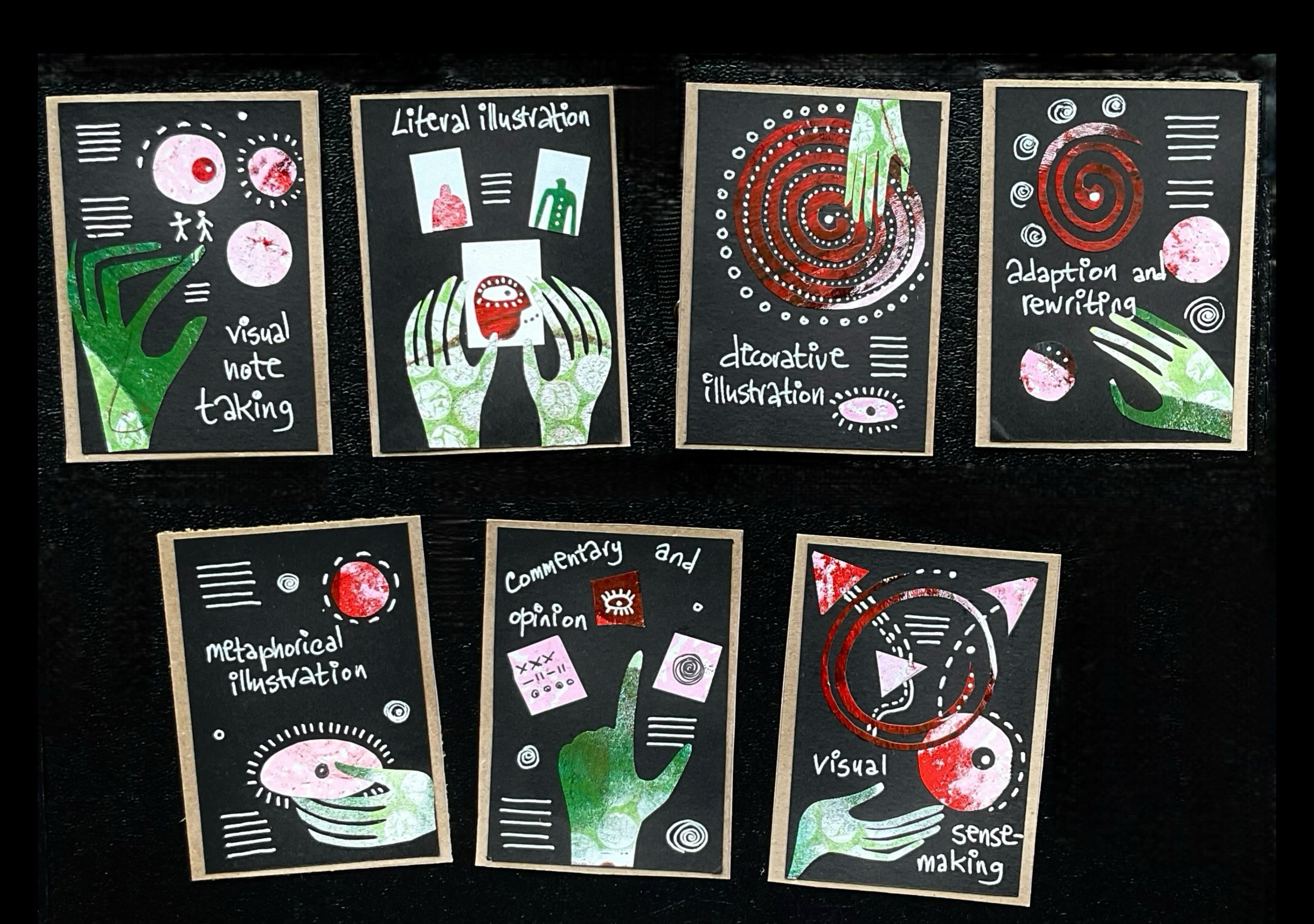
Illustration Research Methods sat on my desk from the start of this year’s 100day project, and I’ve been reading through it. This and next week, I am slowing down to consider elements of the books, and how they resonate with my own research and creative practice. More specifically, I am considering Gannon and Fauchon’s distinctions between different illustration practices in relation to text. Although their primary focus is illustration itself, I approach these practices as possible ways to use illustratiton in research.
From note taking to sense-making
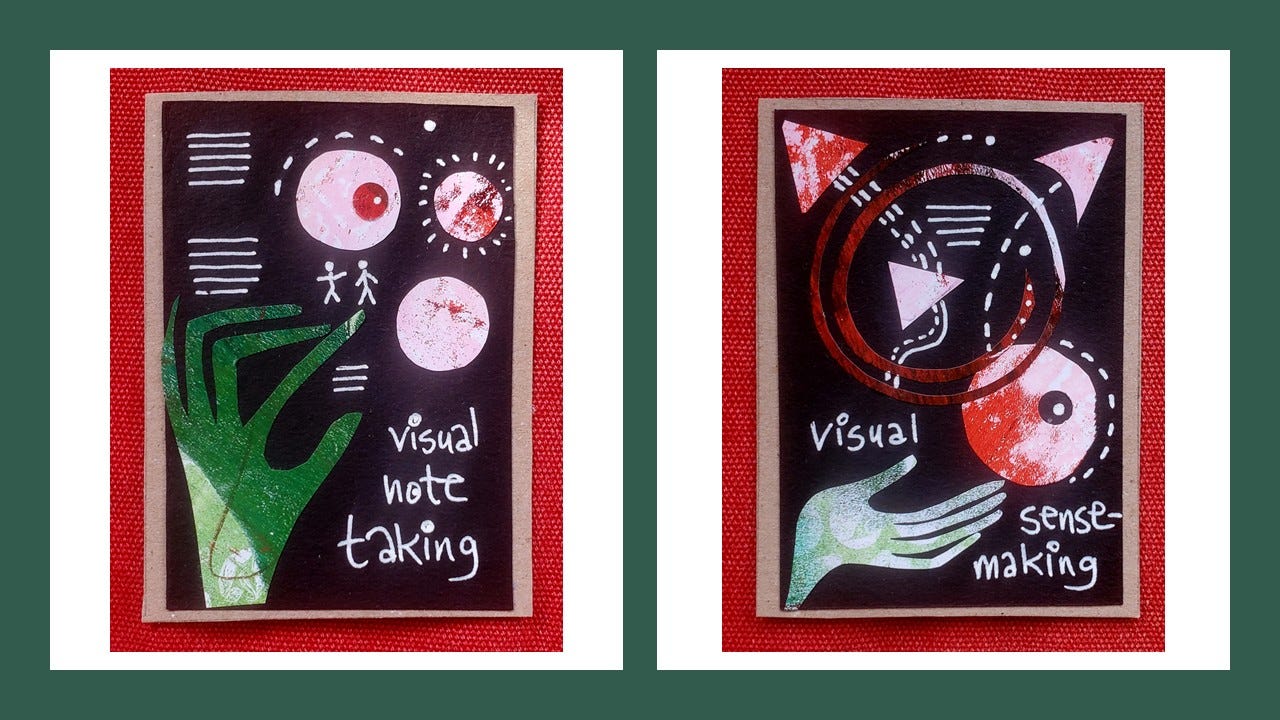
The week began with a card on visual note taking - not exactly illstration in a strict way, but nevertheless a powerful way to document research materials visually, rather than textually- be it during reading, at a conference, or even in class. The visual here is practical, instrumental, ad hoc - using any visual means that work to capture, record, and help recall later. For those of us old enough to have attended university before wikipedia, google, powerpoints and lecture recordings (cough cough, yeah, I am that ancient), note taking was a fundamental skill, often one that was taught as purely textual (short hand, the art of effective summary, etc). And there is so much to say about the freedom of taking notes for oneself visually, rather than textually - not doodles, but an actual visual recordings. It was years before I discovered graphic recording as a profession :) . Coming full circle, the week ended with a card on visual sense making: an artistic and pedagogical practice, discussed by Gannon and Fauchon, as a way to intentionally create visuals to process ideas, concepts, relations or experiences. Note taking and sense making might look the same, but they are in fact two ends of the same spectrum: capturing ideas outside of self in real time, versus processing ideas from within self, slowly and intentionally.
Relating visually to a written text
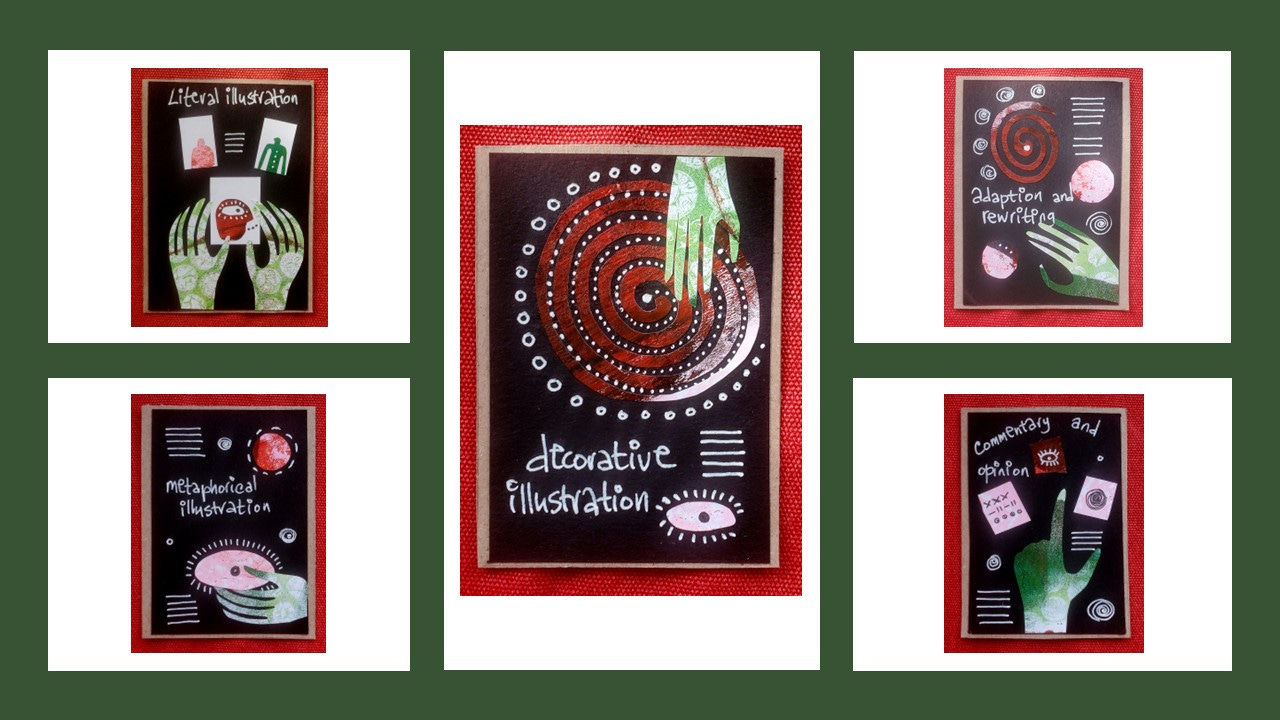
The rest of the week followed five categories of illustration, discussed in the book as five distinct ways of relating to a text: literally, by depicting what is described in the writing; decoratively, by adding embelishmens; using an adaptation and going beyond what is described in the text; mettaphorically, by responding in a symbolic or allegorical way; and by using a commentary, which creates a separate, additional narrative on top of the existing text. Thinking about my own illustrations of specific texts, it was useful to reflect on which caatetgories I tend to gravitate to most often (which turned out to be adaptation, metaphoric illustration and commentary, with a sprinkle of literal illustrations which are often the least interesting…