Text + image
#100dayproject2026, days 22-28

Writing and drawing, for me, have always been two different ways of walking, two different mindsets. Research illustration brings the two together.
Inspiration slow-down
Part of this project’s journey is reflecting on other artists who have inspired me in insihtful and unusual way. This week, I am slowing down to focus on David Shillinglaw’s “Bodies of Land and Water” - a project that propelled me, some time ago, to explore writing and journalling alongside of drawings (and more specifically, as an inter-relation of text and images of human figures). As a traditionally trained academic who is also an artist, I tend to use drawing and writing separately, as two different ways of walking, breathing, thinking and creating. Apart from titles or short phrases, I have not incorporated lengthy writing in my art, nor considered writing as part of art practice. Coming across Shillinglaw’s explorations of humanness, nature, and connection shifted something for me. I year ago, I picked up a small sketchbook, and filled it with over five months of daily reflections on feelings, thoughts, relationships, connections, wounds, forgiveness, and much more, going and going until I reached the last page. This sketchbook was nothing like my many other sketchbooks because it included extensive writing as well as drawing.
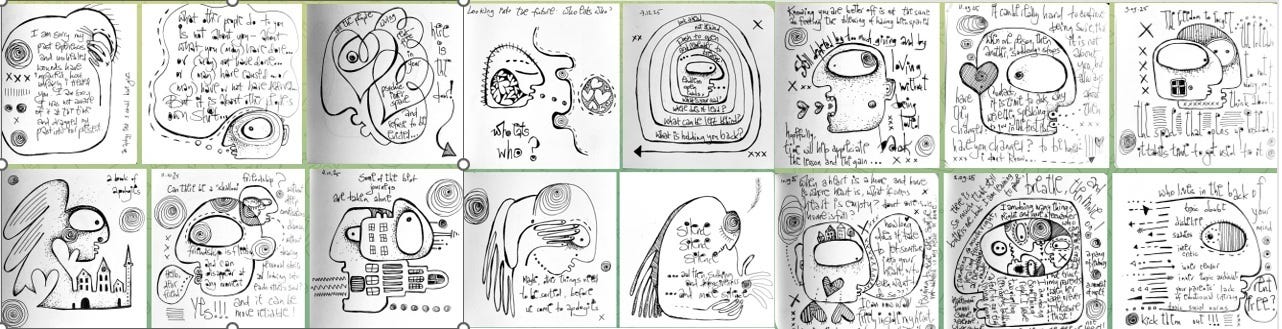
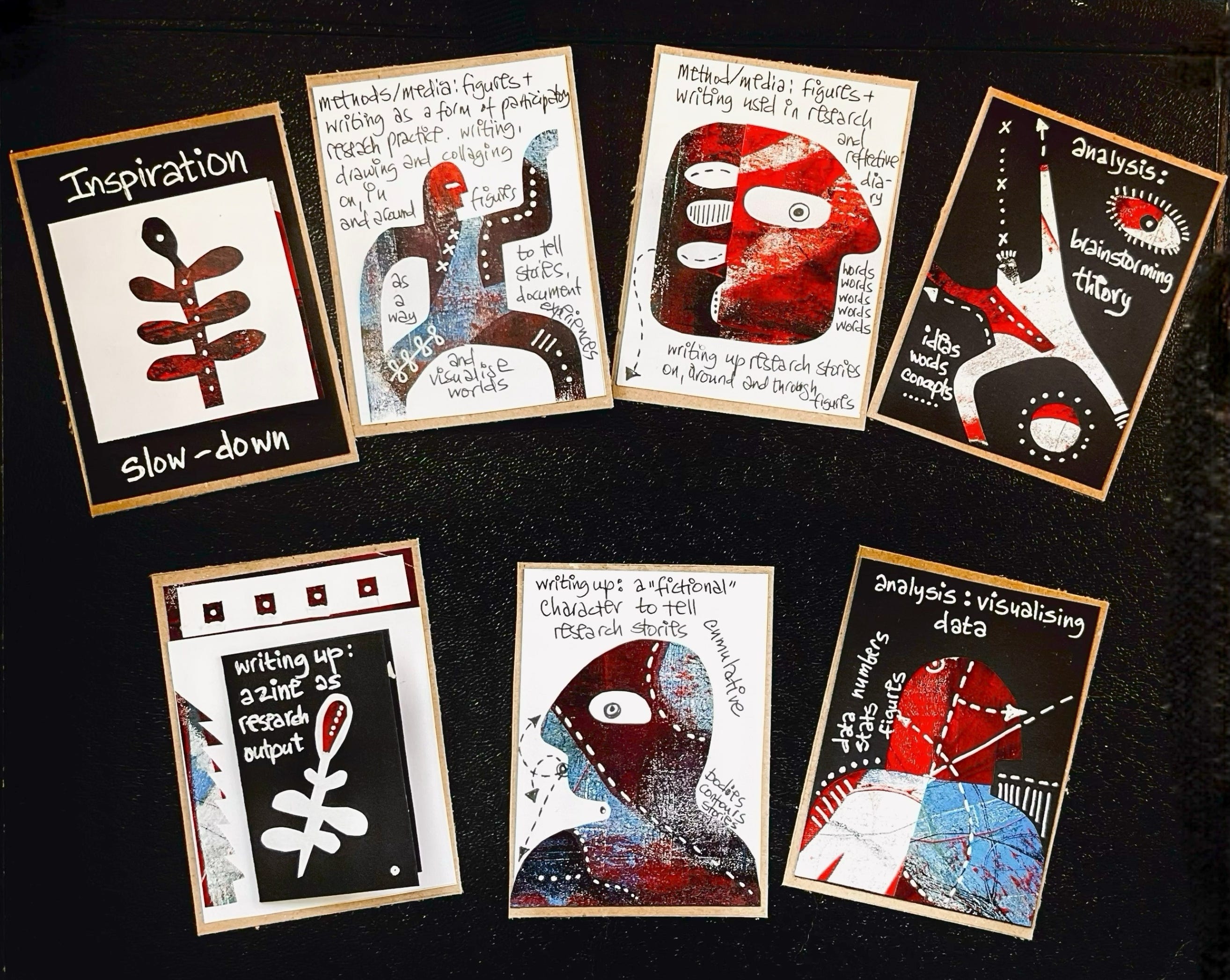
The excercise was not exacly planned, and was mostly personal rather than scholarly. But it became a turning point for me, beyond the reflective writing itself, and has shapred my current work, not just stylistically, but more generally, in expanding my thinking about research illustration. This week, I focused on three areas where this approach can be used: research methods, analysis, and writing up.
Research methods
In his recent Facebook post, Shillinglaw describes how he used his “body scan” templates in workshops, for the participants to fill in with text and drawings. He shared the creations his template inspired, where “parts of a person hidden or restricted by conventions” come out in the process. It is such a powerful, gentle and evocative practice! It inspired me to think further about the use of head or body contours together with text, as a way of creating and processing research ideas. Many qualitative researchers (myself included) use project diaries as a reflective method, and some augment them with life sketches, or embelish them with doodles. However, research diaries can also be drawn+written in a more visually complex way, working analytically through the image. Filling in “body scans” with visual and textual stories is also a fantastic method of participatory research - of data creation, rather than “data collection”, carried out by research paraticipants.
Analysis
But it doesn’t stop there. Text+image, created holistically rather than summatively, and artisticallt rather than statistically, can offer a completely new - and less epistemically violent- way of visualising data. What if, instead of pie charts, graphs, and digital “data visualisations” we drew stories and numbers and abstractions inside or over bodies, I wondered. It can also facilitate ways of brainstorming, imagining and shaping theory, in a visual, analogue, and tactile way.
Writing up
And finally, what about writing up. At the first glance, this seems to be most obvious: research findings can be written and illustrated. Indeed. But the text+image integration brings in new ways of thinking about writing up. Research stories can be told in multiple ways; a journal article is just one of them. A zine is another. A zine filled with body scans -and contour scans more generally. The images and texts inside and outside the “scans” can conjure up ficitonal/ cumulative characters. Writing research this way, using those visual narrative devices to tell stories, is most useful when tellings stories that go against the grain, that tell the silenced, the invisible, the unexpected.
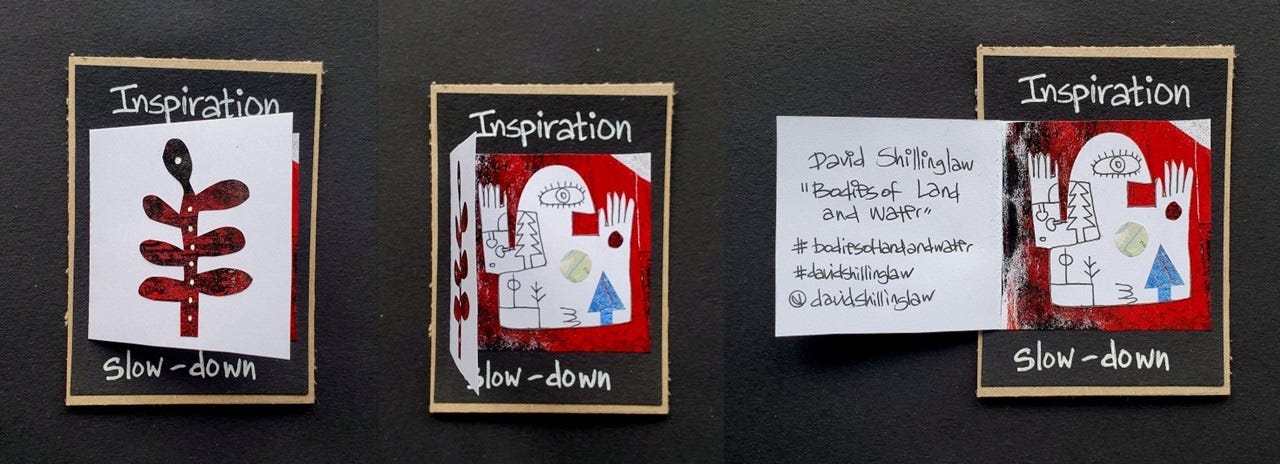
With thanks to #bodiesoflandandwater #davidshillinglaw